 Skip to content

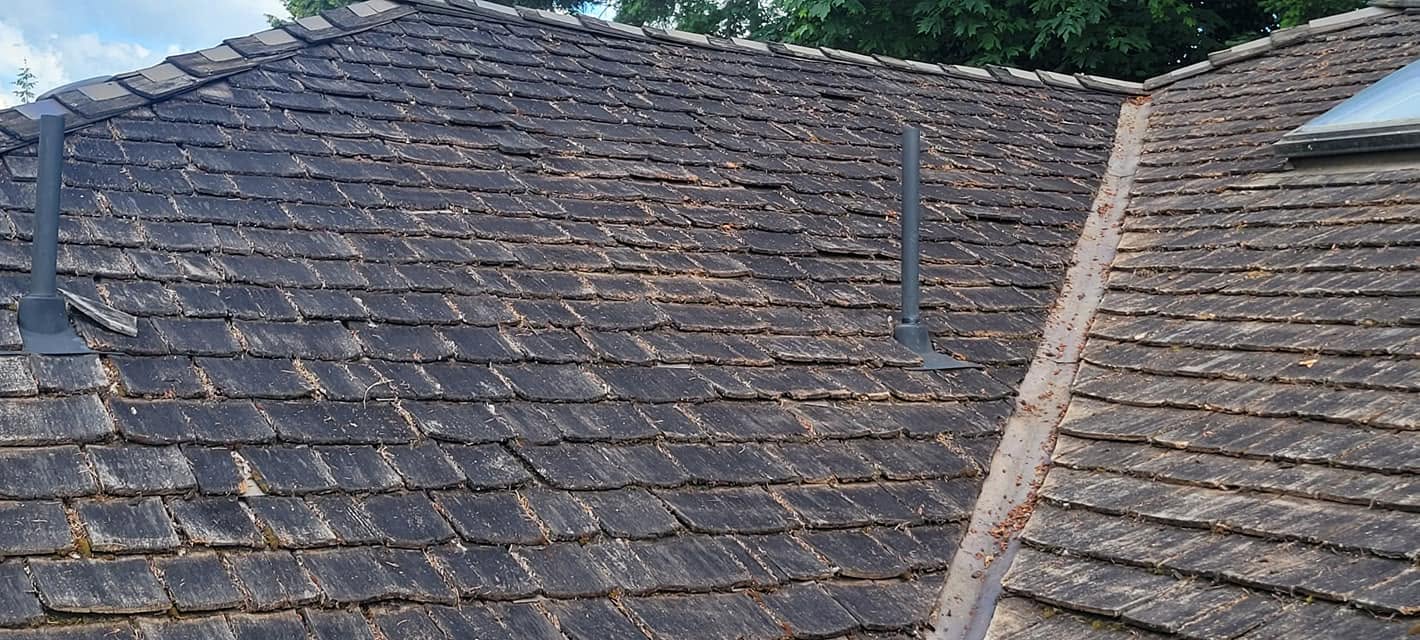
A roof rarely fails all at once. It usually gives you warnings first: a stain on the ceiling, a shingle in the gutter, a bit of granule grit in the downspout. The hard part is not spotting those warnings. It is deciding whether you are looking at a small fix or the beginning of the end for the whole roof.
That decision looks different in Maple Ridge than it does in a drier climate. Long wet seasons, wind-driven rain, moss growth and heavy tree cover all work on a roof in ways that are not always visible from the driveway. Below is a practical way to think it through, so you can walk into a conversation with a roofing contractor already knowing which questions to ask.
Start With an Inspection, Not a Sales Pitch
A repair-or-replace decision should be based on what the roof actually looks like, not on how old the homeowner thinks it is. A proper inspection covers more than the shingles. It should look at the condition of the field shingles, the flashings around chimneys and skylights, the valleys where water concentrates, the condition of the gutters and downspouts, the penetrations for vents and pipes, and, where it can be reached safely, the roof deck and attic side for staining or soft spots.
Ask for the findings to be explained in plain language, with photos if possible. A roofer who can point to a cracked flashing and show you why it is leaking is giving you something useful. A quote that says only that the roof is finished is not. If two contractors disagree, that disagreement usually comes down to what each one inspected and how much they assumed.
When a Repair Is Usually the Right Answer
Repair tends to win when the problem is local and the rest of the roof is still sound. Common examples include a single failed flashing, a handful of storm-damaged shingles, a leak traced to one penetration, or damage confined to a small area near a valley or chimney. If the surrounding shingles are still pliable, still have granule coverage, and are not curling or lifting, a targeted repair can buy years of service.
-
The leak has a single, identifiable source.
-
Damage is confined to one slope or one small section.
-
The roof is well under its expected service life.
-
Flashing, vents and valleys are otherwise in good condition.
-
There is no sign of rot, soft decking or water in the attic structure.
One caution: patching a symptom without finding the source is how a small repair turns into a repeat visit every spring. Water travels along framing before it shows up as a ceiling stain, so the visible spot is often not where the water got in.
When Replacement Is the Better Money Decision
Replacement starts to make sense when the roof is failing in more than one way at once. If repairs have become a yearly habit, if leaks appear in unrelated parts of the house, or if shingles are cracking, curling and losing granules across whole slopes, you are no longer fixing a problem. You are paying instalments on a roof that is already done.
Decking condition is often the deciding factor. A roof with widespread soft spots or rot needs more than new shingles over the top, and covering up a compromised deck simply traps the problem under a fresh surface. On the other side of the ledger, a replacement lets you correct things a repair cannot touch: ventilation, underlayment, flashing details and drainage, all in one go.
Age, Material and Slope All Change the Answer
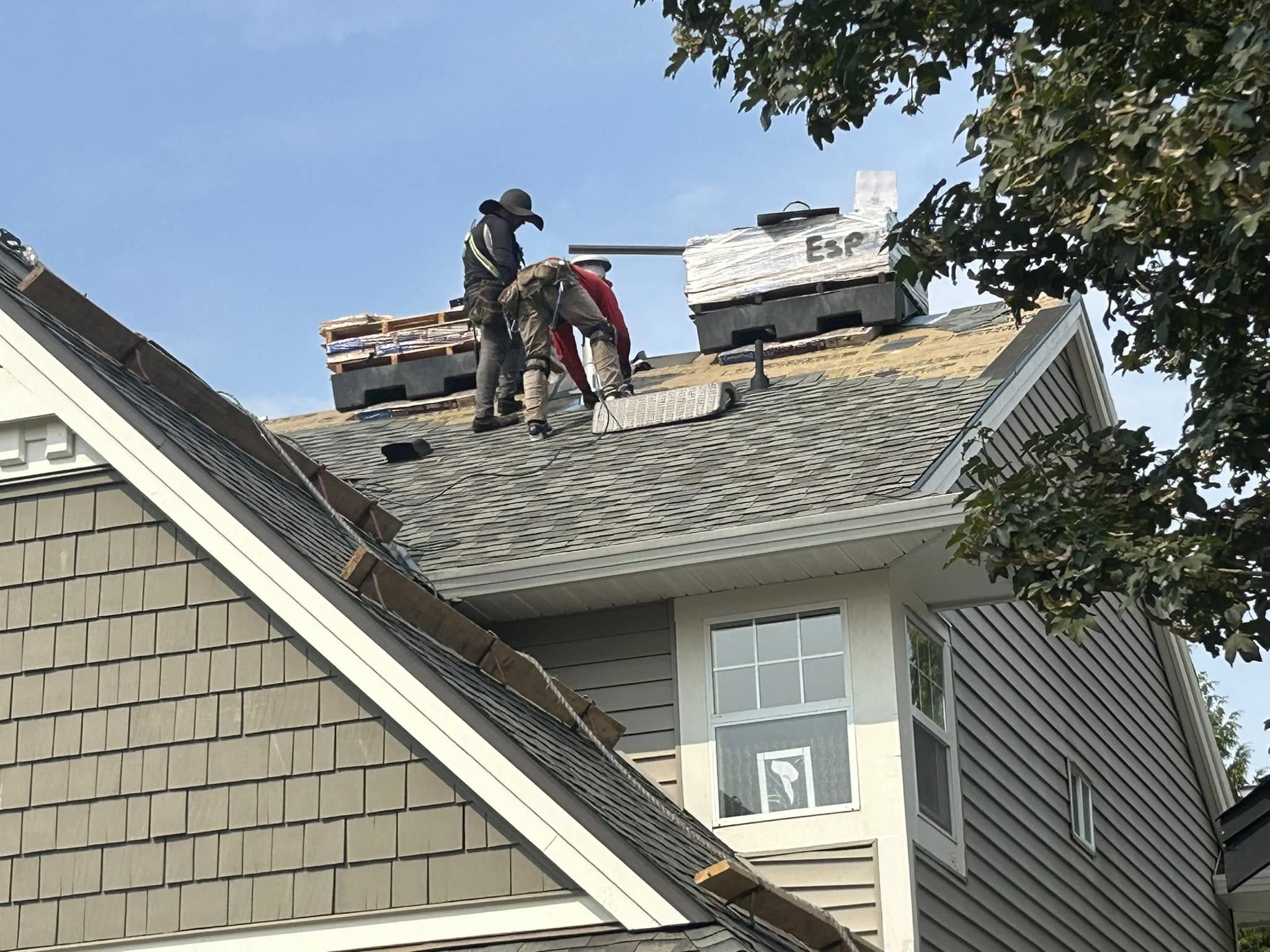
Asphalt shingle systems are typically built for a 20 to 30 year lifespan, and that range depends on product quality, installation, ventilation and exposure. A well-installed roof at 12 years old with one flashing leak is a repair candidate. A 25 year old roof with multiple problem areas is not, even if the visible shingles still look passable from ground level.
Material matters just as much. Asphalt shingles, torch-on modified bitumen membranes and low-slope systems all age differently and have different repair economics. Flat and low-slope roofs in particular are a separate conversation, covered further down. If you do not know what is on your roof, that is the first thing to establish, because it determines both the repair options and the replacement approach.
What Maple Ridge Weather Does to a Roof
Roofs in this part of British Columbia deal with a lot of moisture, and moisture is patient. Steady rain finds its way into any gap in flashing or sealant. Wind-driven rain pushes water sideways, under lifted shingles and into spots that stay dry during a normal storm. Moss holds damp against the surface and works its way into seams. Trees drop needles and branches that clog gutters, and backed-up water finds the weakest point in the roof edge.
That combination means small failures deserve attention sooner here than they might elsewhere. A lifted shingle or a cracked sealant bead is not just cosmetic. It is an entry point that will be tested repeatedly through the wet season.
Flat and Low-Slope Roofs Need Their Own Conversation
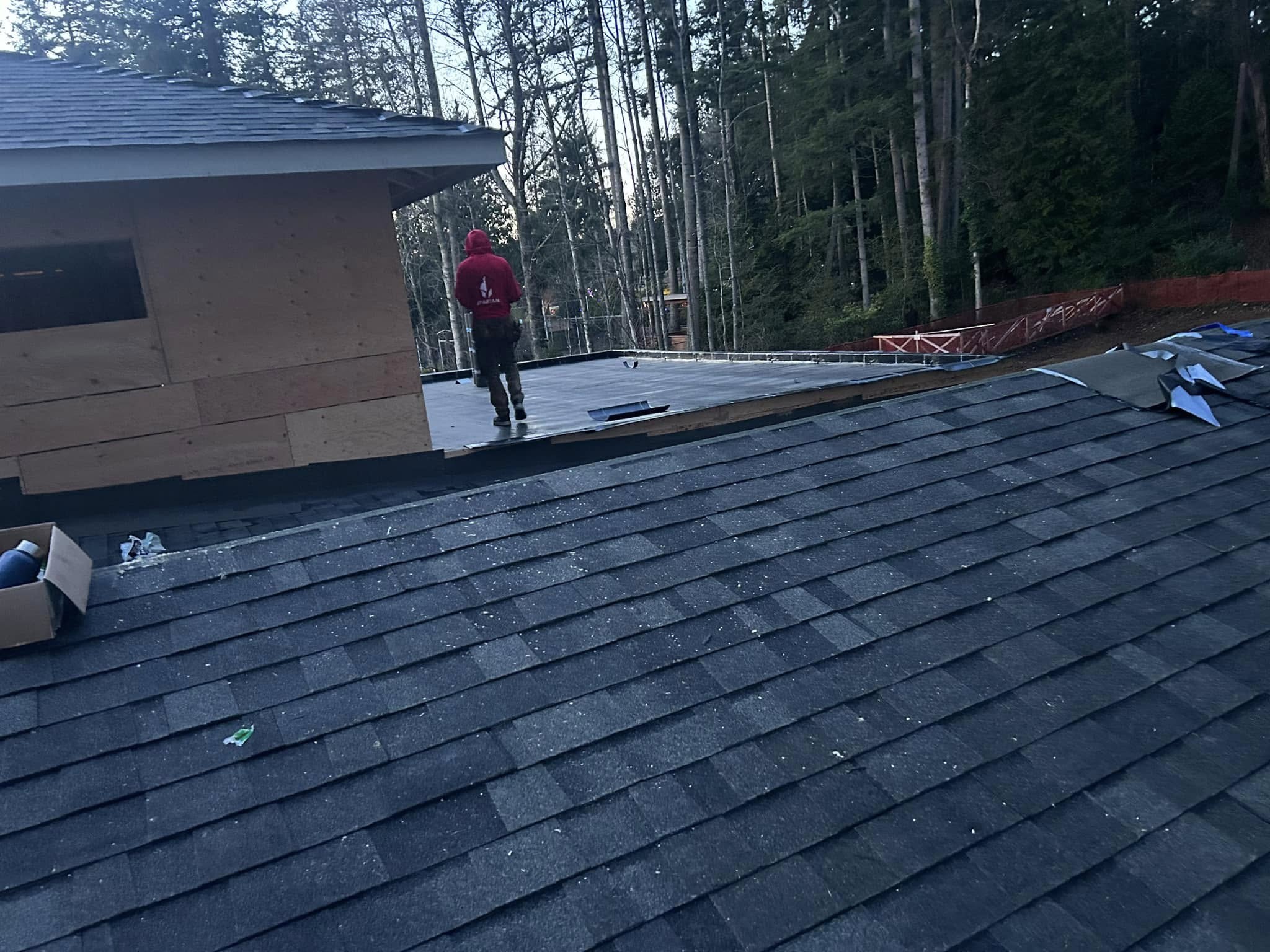
Torch-on and modified bitumen membranes behave differently from pitched shingle roofs. Small blisters, seam failures and isolated punctures can often be repaired and monitored, especially on a roof that is otherwise draining well. What matters more on a flat roof is water management. If water ponds, if drains or scuppers are blocked, or if seams are failing across a large area, patching starts to feel like a temporary measure against a system that has reached its limit.
On flat roofs, the question is less about a single leak and more about how much life the whole membrane has left. A contractor should be able to show you the difference between a repairable detail and a membrane that is nearing the end of its service.
A Quick Decision Checklist
If you want a rough sense of where you stand before anyone visits, run through these points. None of them is decisive on its own, but the pattern usually points clearly one way.
-
How old is the roof, and can you confirm the age from installation records or a previous owner?
-
How many separate leaks have you had in the past few years?
-
Are shingles curling, cracking, losing granules or missing across whole slopes?
-
Is any flashing, valley or penetration visibly failing?
-
Are the gutters and downspouts handling water, or overflowing?
-
Is there staining, dampness or soft decking visible from the attic?
-
Are you planning to sell, and would a buyer’s inspection raise the roof as an issue?
What a Proper Replacement Should Include
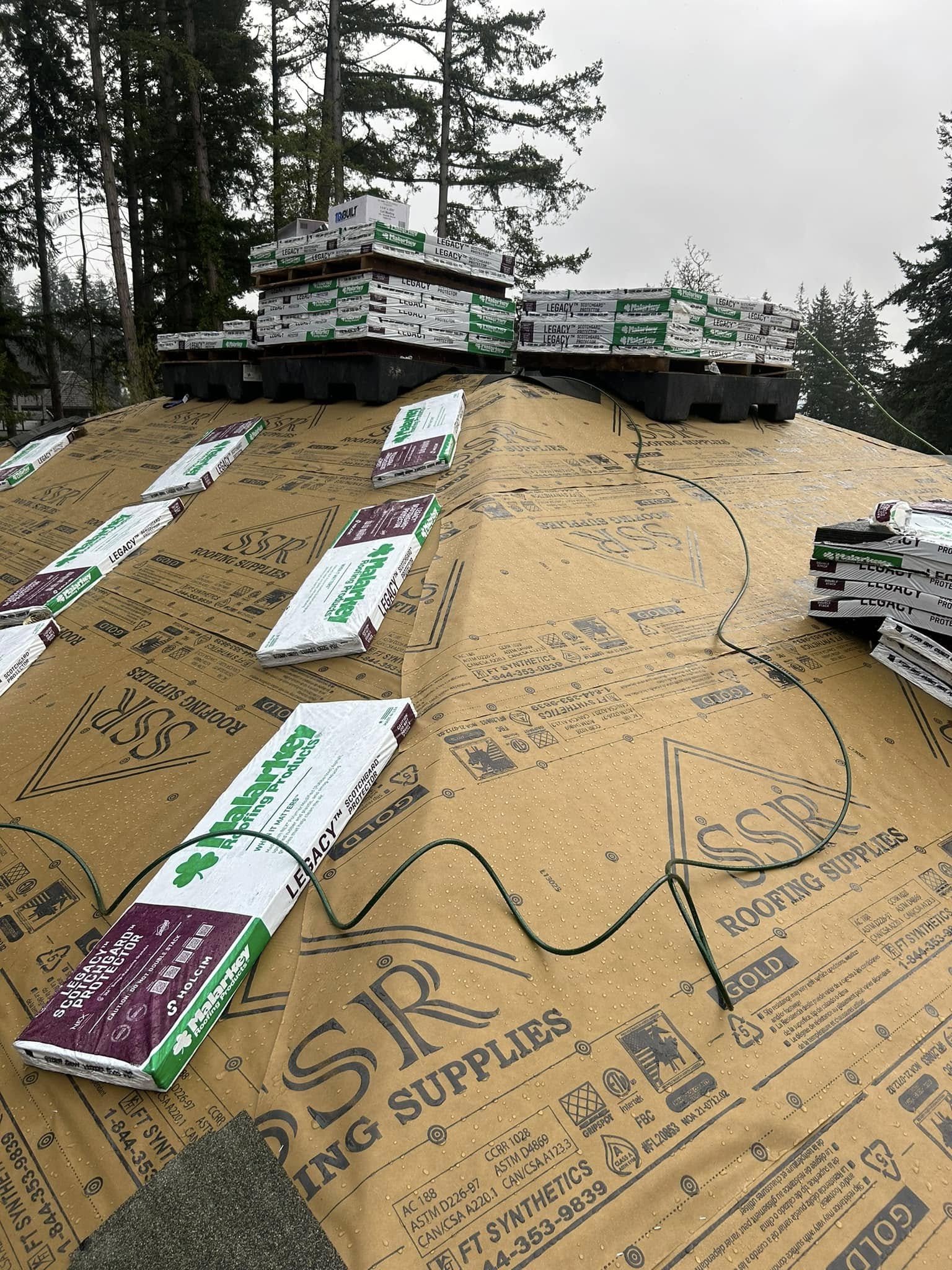
A replacement is not just new shingles over the old ones. A complete roofing system includes the underlayment, the ice and water protection where it belongs, new flashing at chimneys, walls and penetrations, correct ventilation so the attic can breathe, and attention to the roof deck underneath. Gutters and downspouts are part of the water path, so it makes sense to assess them at the same time rather than discovering a drainage problem after the shingles go on.
This is where the difference between contractors shows up. One quote may be for shingles. Another may be for a full system. Comparing them on price alone without comparing scope is the most common way homeowners end up disappointed.
Questions Worth Asking a Maple Ridge Roofer
Before signing anything, get clear answers to a few basics. Ask whether the contractor is licensed and insured, and ask for the details rather than taking a verbal yes. Ask what warranty covers and whether it covers materials only or labour as well. Ask who will actually be on the roof. Ask what happens if rot is found once the old surface is off, and how that would be priced. Ask whether the company handles both repairs and full replacements, because a contractor who only replaces roofs has an obvious incentive.
Spartan Roofing BC is based in Maple Ridge and works across the Lower Mainland and Fraser Valley on both repairs and replacements, including torch-on work for flat and low-slope roofs. That local base means an inspection is a short drive, not a scheduling problem, and it means the contractor sees the same weather the roof does. Manufacturer products such as IKO, Malarkey and CertainTeed are part of the material mix, so it is fair to ask which system is being proposed for your home and why.
Frequently Asked Questions
How long does a roof repair normally last?
A well-executed repair on a roof that is otherwise healthy can last for years, often until the surrounding shingles reach the end of their service life. A repair on a roof that is already failing in several places may only last a season or two. The repair itself matters, but the condition of everything around it matters more.
Can I replace just one section of my roof?
Sometimes, yes. A single damaged slope can be replaced if it matches the rest of the roof and the underlying deck is sound. The challenge is matching materials and colour on an older roof, and blending a new section into an aged one so the joint does not become the next leak. A contractor can tell you whether a partial replacement is realistic.
Does a new roof add value to a Maple Ridge home?
A roof in good condition removes a common objection during a sale and gives buyers a clear picture of what they are taking on. How much value it adds depends on the home, the market and the roof system installed. A documented warranty and clear records of the work are worth keeping for exactly that reason.
Will my insurance cover roof damage?
Coverage depends on the cause of the damage and the terms of your specific policy. Sudden events and gradual wear and tear are usually treated very differently. Read your policy or speak with your insurer before assuming anything, and keep photos and documentation of the damage in case you need to make a claim.
How do I know if the roof needs replacing rather than repairing?
The clearest signals are repeated leaks in different areas, shingles failing across whole slopes, soft or rotted decking, and a roof at or beyond its expected service life. Any one of those on its own may still be repairable. Several together usually point to replacement, and an inspection is the way to confirm it.